
-57%

Related products
-
Light & Optics, Physics, Physics Equipments, Stem Kits
Reflection of Light Apparatus
- The reflection of Light Apparatus is designed to demonstrate the reflection of light in a plane mirror.
- The setup includes a plane mirror mounted on a stable base, an adjustable light source, and a protractor or angle-measuring device.
- The mirror’s surface is precisely aligned to ensure accurate reflections.
- The light source allows for controlled incidence angles, and the protractor measures the angle of incidence and reflection.
- This apparatus visually confirms that the angle of incidence equals the angle of reflection, adhering to the laws of reflection.
SKU: n/a -
General Items, Physics, Physics Equipments
Electromagnet for Sonometer
- This Electromagnet is utilized to induce resonant vibrations in the Sonometer wire by attracting the iron wire to the electromagnet.
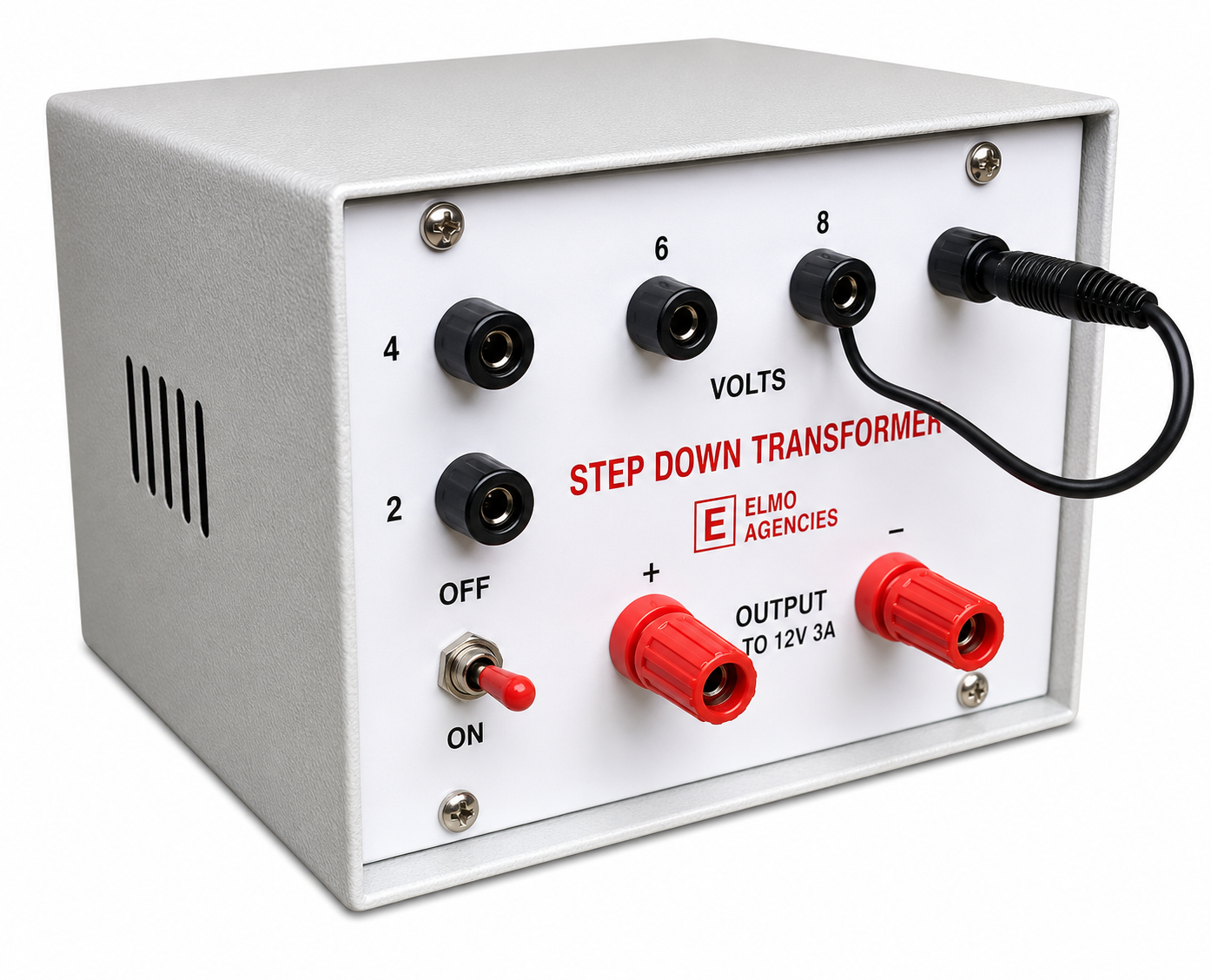
- It required 6 to 8V AC to be provided using Jayse AC source for the sonometer supply.
- It’s required for a sonometer experiment.
SKU: n/a -
Physics, Physics Equipments, Stem Kits, Waves & Sound
Tuning Fork with Resonance Box
- A Resonance box with a tuning fork is a metal instrument that produces a specific pitch when struck, commonly used in music and sound tuning.
- The wooden box amplifies the sound produced by the tuning fork, enhancing its volume and richness.
- The combination of the tuning fork and resonance box allows for clearer sound projection, making it an effective tool for various applications, including musical tuning and educational demonstrations.
SKU: n/a -
Battery Eliminator, Physics, Power Supplies
Battery Eliminator for Physics Laboratory
Battery eliminator is designed to give the most popular battery voltages. Substitutes a wide variety of batteries including AA, AAA, C, D, and 9V types. The voltage is conveniently selected by a rotary switch. The output is fully protected from short circuits and overloads. Battery Eliminator operates on 220V (±10 %), 50/60Hz input.
SKU: n/a


