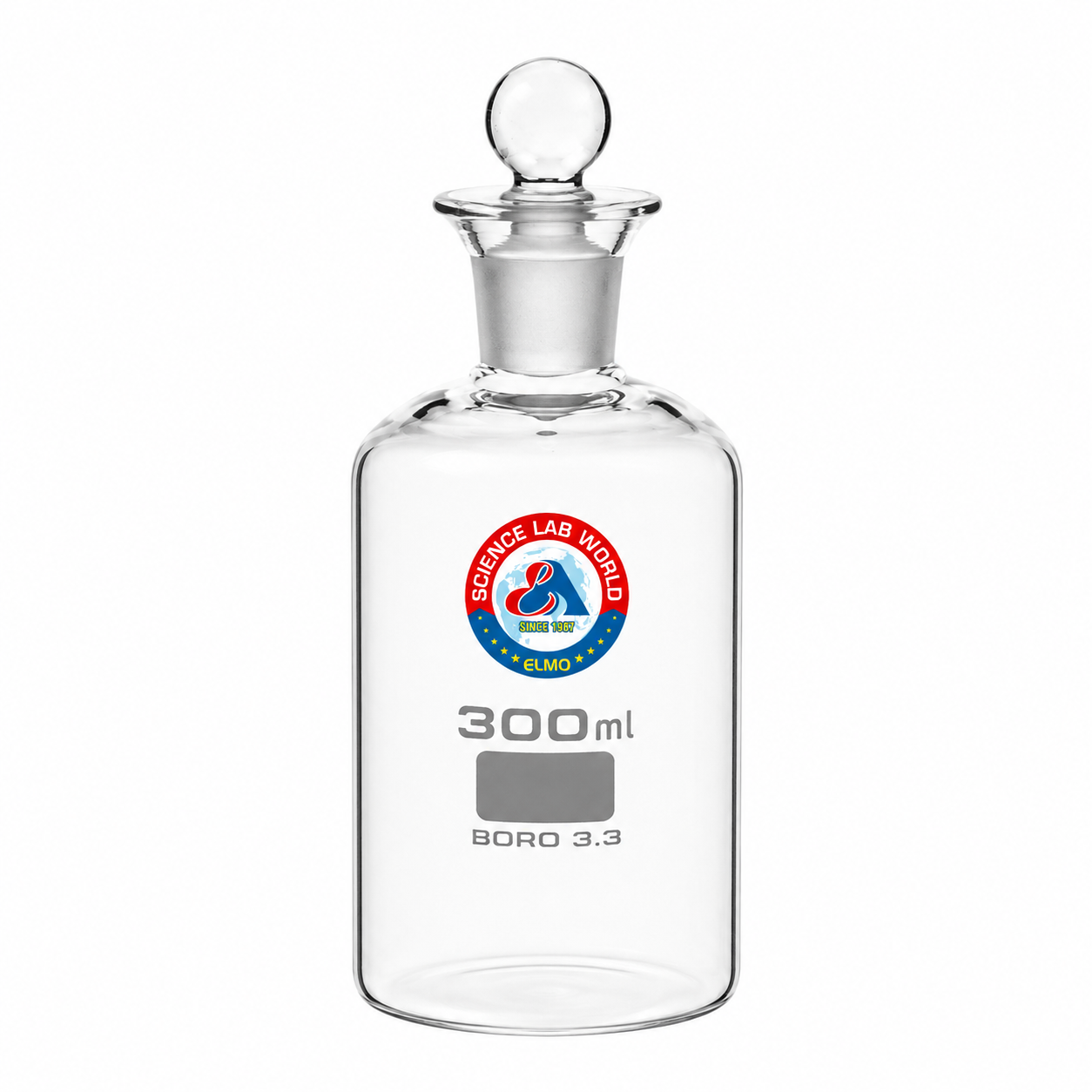
BOD Bottle – 330 ml Glass Bottle for Dissolved Oxygen Testing
The BOD Bottle is a laboratory glass bottle specifically designed for Biochemical Oxygen Demand (BOD) testing of water and wastewater samples. Supplied by Elmo Agencies, a scientific manufacturer in Ambala, it provides a suitable sealed container for collecting and incubating samples during dissolved oxygen analysis.
BOD Bottle by Elmo Agencies is used in water-quality and environmental laboratory work to hold samples during BOD determination. The bottle is designed to minimize gas exchange with the atmosphere when properly filled and stoppered, which is important because BOD testing involves measuring changes in dissolved oxygen during controlled incubation.
The specified bottle has a 330 ml capacity and is supplied with a glass pennyhead stopper.
Specifications
| Specification |
Details |
| Capacity |
330 ml |
| Material |
Glass |
| Stopper |
Glass pennyhead stopper |
| Socket Size |
18/19 |
| Height |
Approx. 7 inches with stopper |
| Height Without Stopper |
Approx. 6 inches |
| Diameter |
Approx. 2.75 inches |
| Application |
BOD and dissolved oxygen testing |
BOD Bottle Design
The bottle is supplied with a glass pennyhead stopper that provides a close-fitting closure for the bottle. The stopper can be replaced if required.
The design helps reduce contact between the water sample and atmospheric air during the test, helping maintain controlled conditions for dissolved oxygen measurement.
What Is a BOD Bottle Used For?
- Biochemical Oxygen Demand testing
- Water-quality analysis
- Wastewater testing
- Environmental laboratory analysis
- Dissolved oxygen-related experiments
- Water pollution assessment
- Educational environmental science practicals
How Is a BOD Bottle Used?
A typical BOD test involves filling the bottle with the water sample according to the applicable testing method and avoiding unnecessary air bubbles. The bottle is then sealed with its stopper.
The sample is incubated under the specified test conditions, commonly 20°C for five days in the standard BOD₅ test. Dissolved oxygen is measured before and after incubation, and the decrease in dissolved oxygen is used to determine the BOD value, with appropriate corrections where required.
The exact procedure should follow the applicable laboratory standard or testing method.
Glass Properties
The specified glass bottle offers useful laboratory properties, including good chemical durability and resistance to thermal shock compared with ordinary soda-lime glass. Its suitability for autoclaving depends on the complete bottle and stopper configuration and the applicable manufacturer’s specifications.
Key Features
- 330 ml capacity
- Glass construction
- Glass pennyhead stopper
- 18/19 socket size
- Designed for BOD testing
- Suitable for water and wastewater analysis
- Useful for environmental and analytical laboratories
- Replaceable stopper
Important Precautions
- Fill the bottle according to the applicable BOD testing procedure.
- Avoid trapping air bubbles when preparing a BOD sample.
- Ensure the stopper is properly seated before incubation.
- Keep the bottle clean to avoid contamination of samples.
- Follow the specified incubation temperature and testing period.
- Check the glassware for cracks or damage before use.
Conclusion
The BOD Bottle by Elmo Agencies is a practical 330 ml laboratory glass bottle for Biochemical Oxygen Demand testing and water-quality analysis. Its glass pennyhead stopper and close-fitting design make it suitable for controlled sample handling during BOD testing, wastewater analysis, environmental laboratory work, and educational practicals.